Picasso, The Figure
This study reflects on how the exhibition translates a complex artistic legacy into a spatial narrative.
Mariam Al Darmaki (Founder and Creative Lead, Rebounded)
The Concept & Curatorial Structure
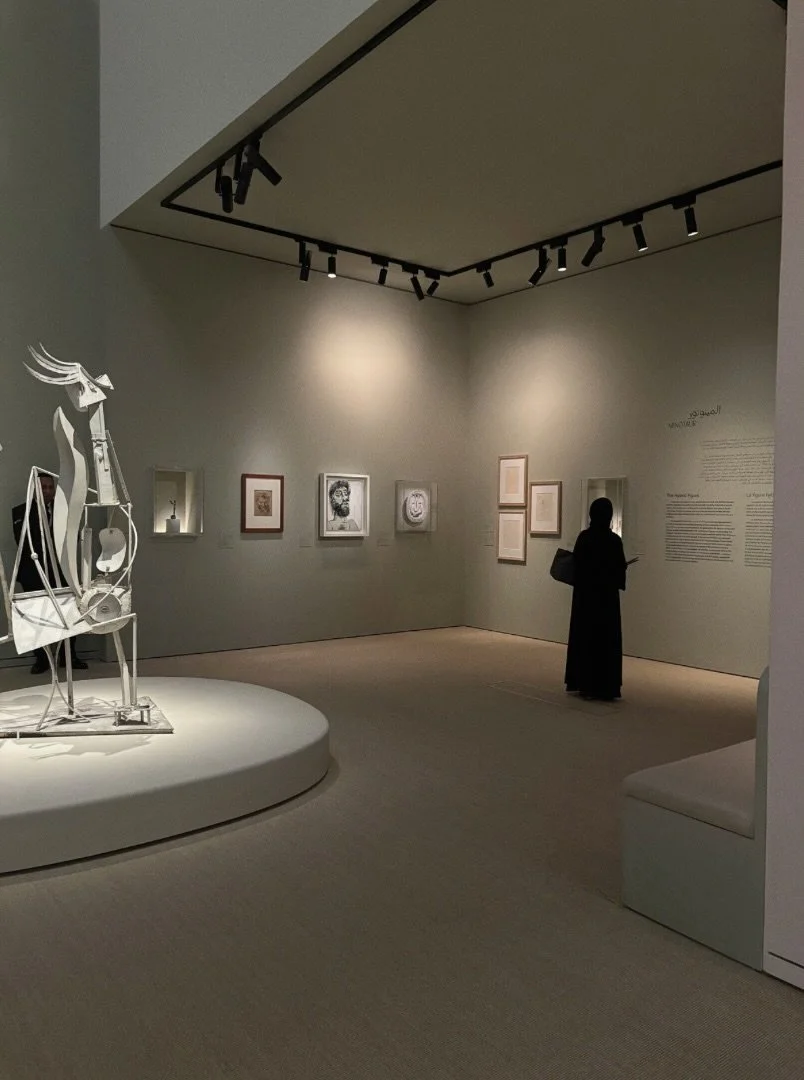
The exhibition adopts an open and fluid spatial flow that gently guides visitors to explore Picasso’s reinvention of form. Across all sections, the human body remains the central reference point.
Structurally, the exhibition adopts a hybrid approach, combining a thematic framework rooted in Greek mythology with a broader conceptual progression. With a curatorial evolution that moves from interpretation, to transformation, and eventually toward the idea of Picasso himself becoming myth. The final section steps away from explicit mythological titles, suggesting a conceptual closure in which the artist is absorbed into the very system of myth-making he engages with.
Artwork Relationships
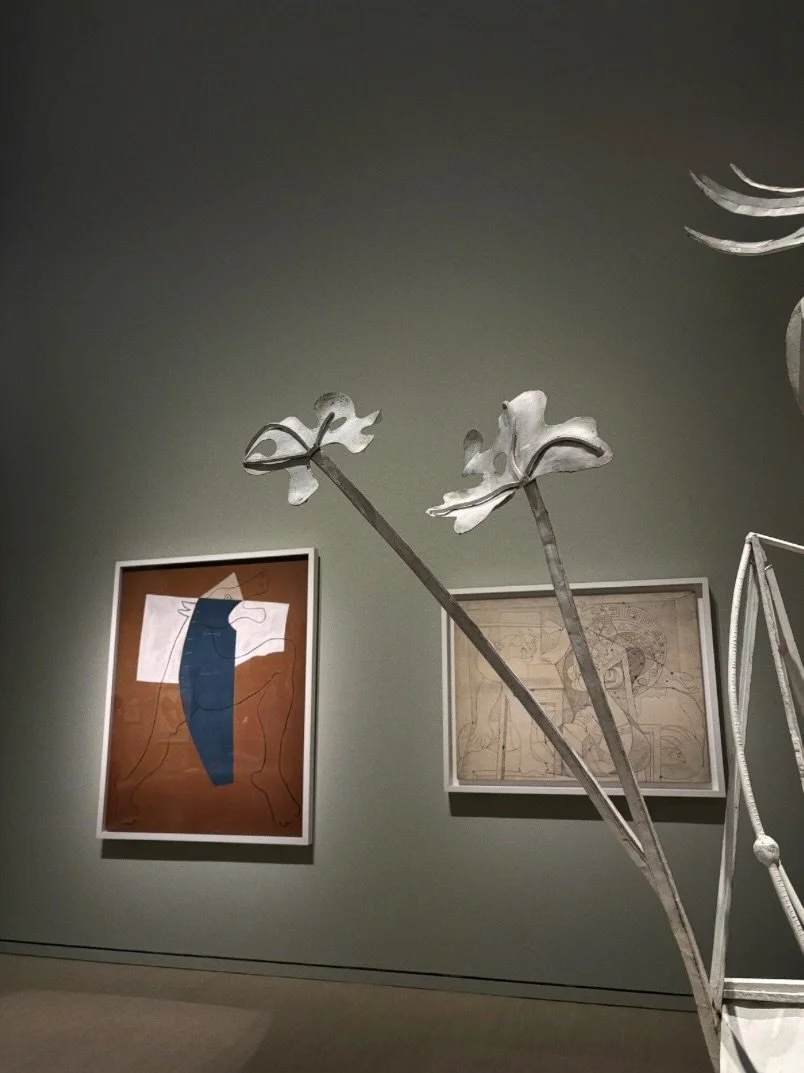
The artwork placements demonstrate a strong and intentional handling of scale. They show how the human form can exist both in fragile, reduced studies and in expansive, commanding compositions.
Throughout the exhibition, there is generous use of breathing space, allowing works to be experienced individually while still contributing to the broader narrative structure.
The lighting design throughout the exhibition was exceptional. Shadows were used deliberately as an active curatorial tool, shaping form and depth, allowing the spaces to move beyond presentation into atmosphere.
The result isn’t theatrical in an exaggerated sense, it’s deeply sensory and absorbing. Glare and visual discomfort are minimal to almost nonexistent.
Accessible Scholarship
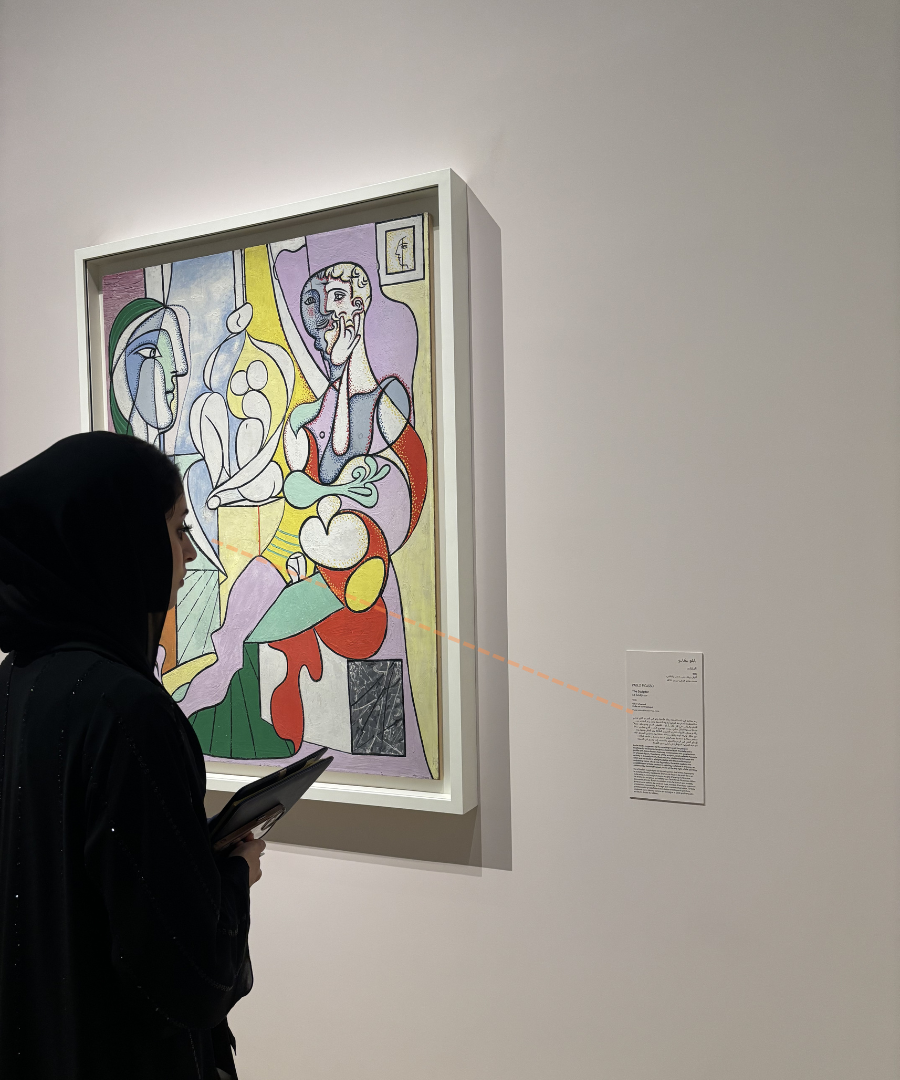
There was a strong balance between scholarly depth and accessibility. While the wall texts are conceptually rich, they were positioned below optimal eye level, requiring frequent bending to read and adding a level of interruption to an otherwise smooth spatial experience.
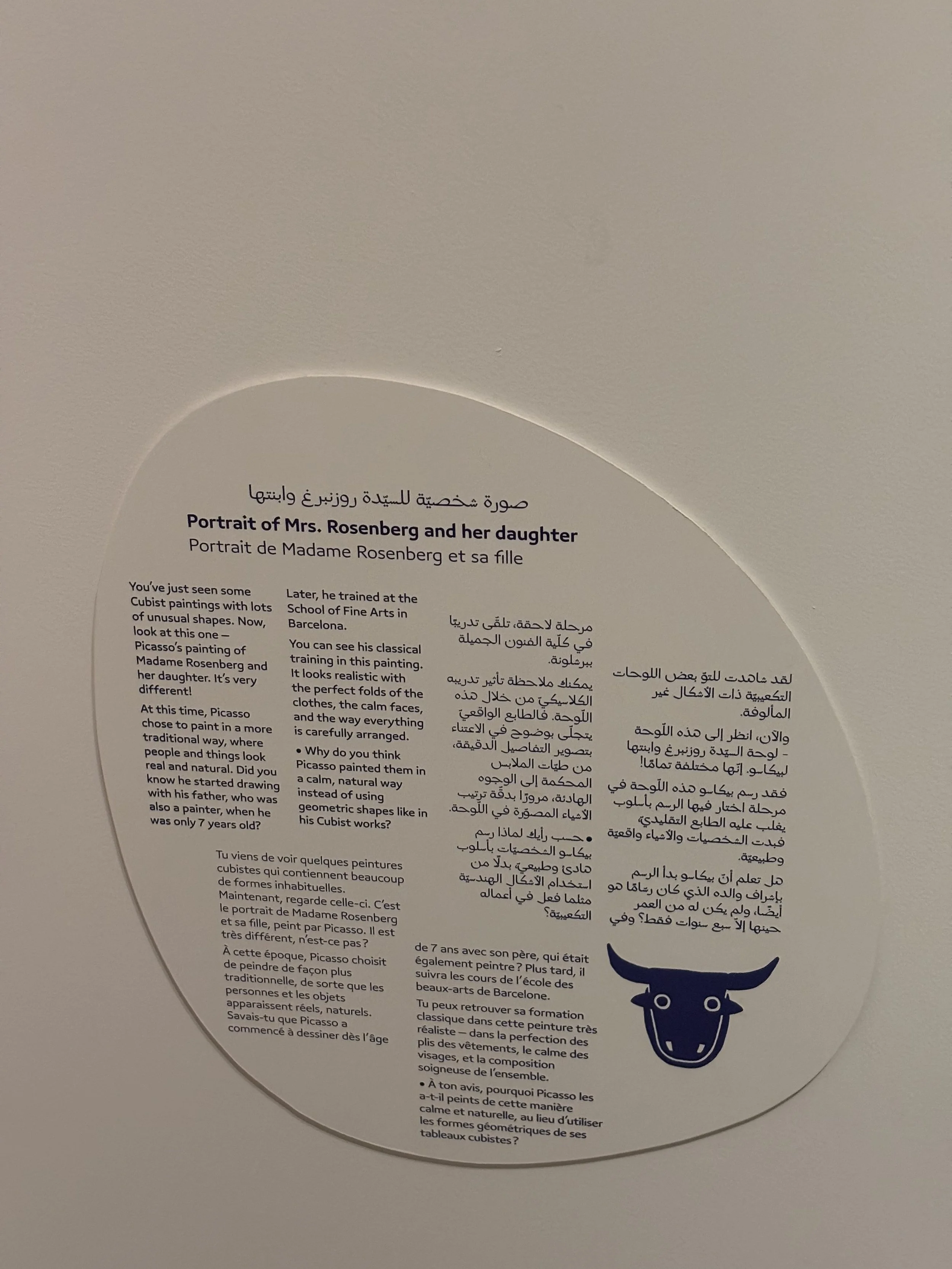
Alongside the formal texts, there are additional labels marked with the bull icon that introduce guiding questions and prompts for observation. These interventions are particularly effective in broadening accessibility.
The labels also generally strike a good balance, providing enough context to frame the viewer’s understanding while still leaving space for personal interpretation, emphasizing looking and re-seeing rather than fixed meaning.
In terms of language, the exhibition maintains a strong commitment to equality across Arabic, English, and French.

Controlled Climax
The exhibition handles emotional manipulation with a strong sense of restraint and respect. Emotional responses are clearly engineered through scale, subject matter, and spatial sequencing, but never forced.
The design supports a gradual accumulation and release of feeling, ensuring that emotional engagement arises organically from the works and their relationships rather than from theatrical exaggeration.
Minor Disruption
The poetry section introduces a more complex sensory experience. While emotionally effective in its content and intent, its spatial presence becomes slightly disruptive. The sound carries beyond its intended zone, making it difficult for visitors to pause, converse, or engage in discussion with educators. A more restrained delivery, such as a softer or whispered vocal tone, could have enhanced intimacy and emotional depth while reducing auditory spill into adjacent areas.
Imported Curatorial Framework
The inclusion of Arab modernists were positioned as part of a shared visual and conceptual conversation around the human figure, in a way that allowed them to stand in dialogue with Picasso’s practice.
However, the overarching narrative, particularly its reliance on Greek mythology, resonates more strongly within a European context than within a local one, and do not fully anchor themselves in the cultural specificities of the region.
As the themes are intellectually accessible and have been widely studied, Abu Dhabi’s voice is less about direct narrative authorship and more about curatorial hospitality. This reinforces Abu Dhabi’s identity as a cultural hub, where engagement with international narratives is framed through openness, exchange, and coexistence.
Much love to our Abu Dhabi.
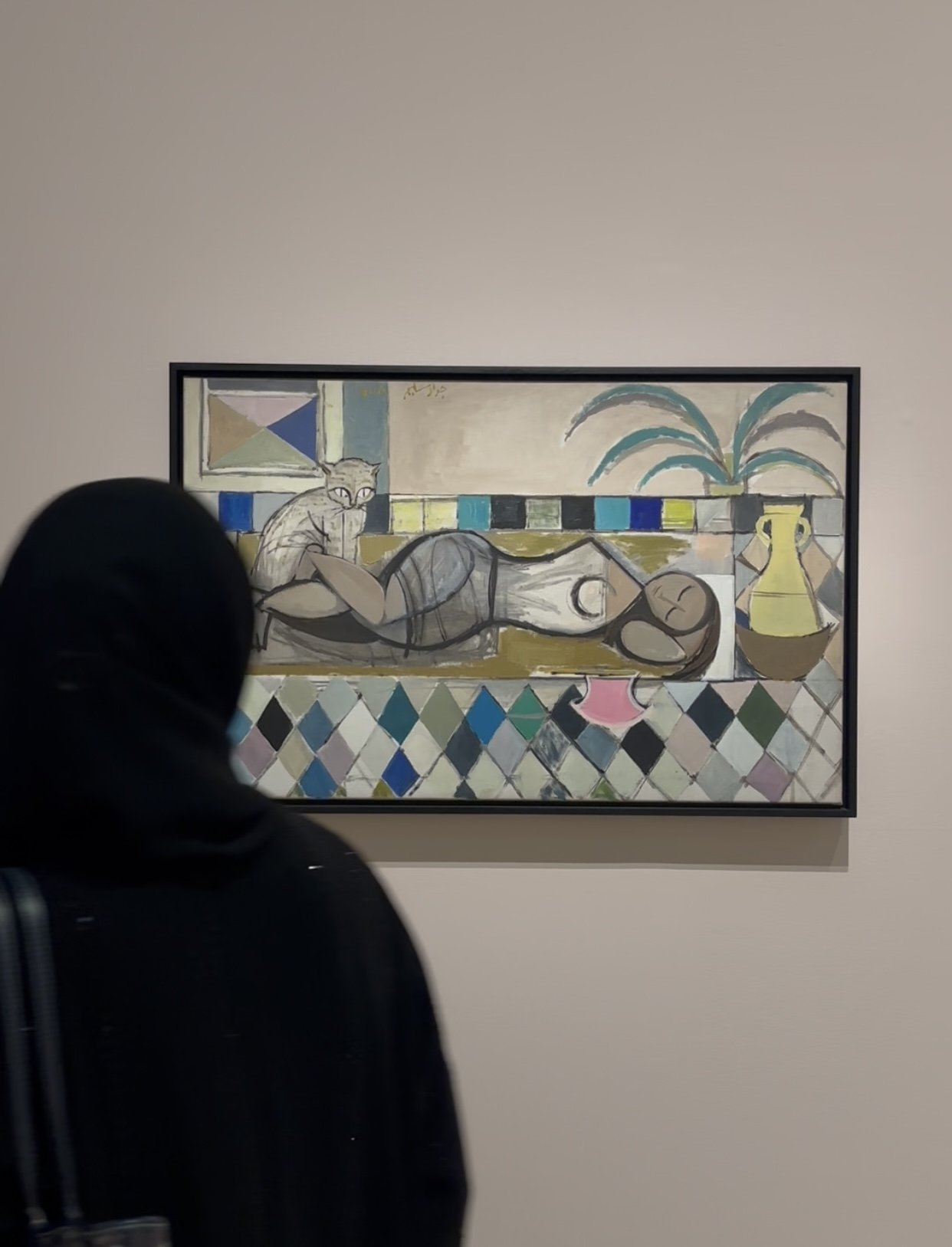
This study draft reflects Mariam Al Darmaki’s ongoing interest in how exhibitions operate as spatial narratives. She translates these observations into Rebounded’s work across exhibitions, campaigns, and cultural projects, where storytelling is embedded within space itself.
Picasso, The Figure is on display at Louvre Abu Dhabi until May 31st - we highly recommend visiting with a guided tour (genuinely fun and incredibly informative).